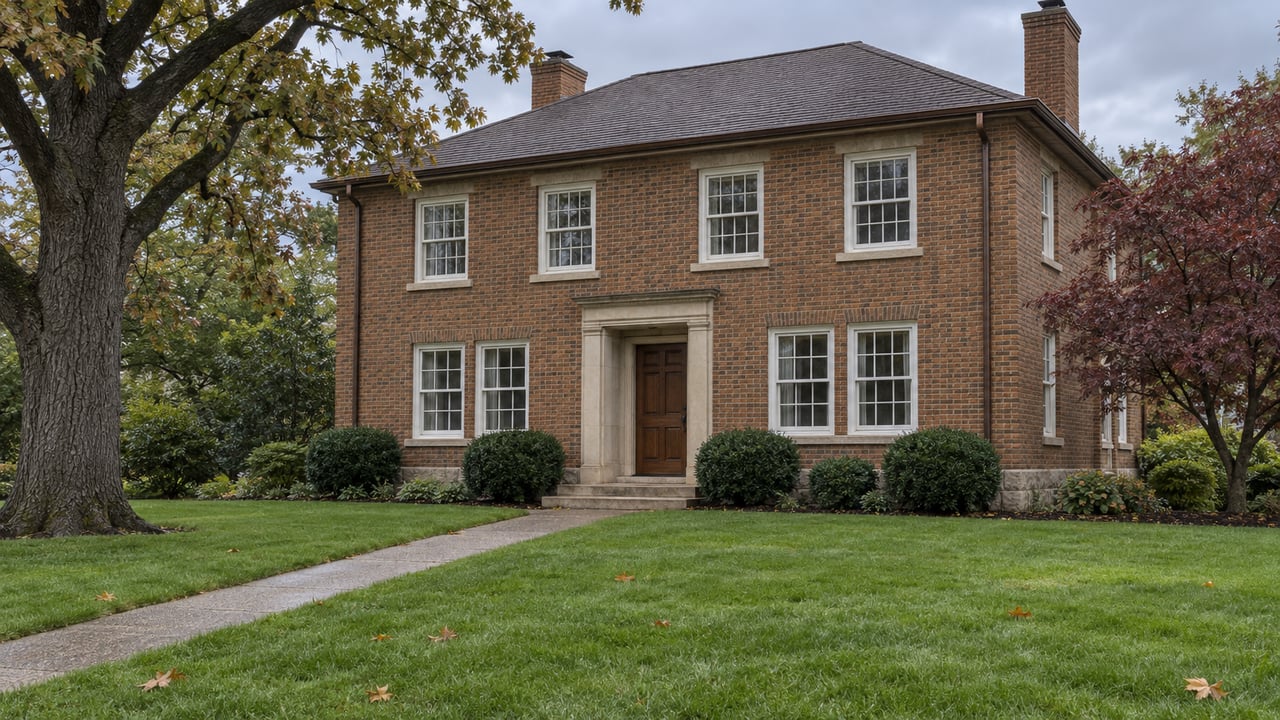
Clayton's New Street Trees Are Already Assigned, Address by Address
October 22, 2026
October 22, 2026
Which tree goes in the treelawn in front of your house, and does it go in this winter? For most of Clayton, the City has already answered the first question in writing, and it has answered the second for every spot scheduled in the first year. The City's tally for the full program is 595 trees.
The City's Tree Restoration Planting Plan, dated May 7, 2026, assigns a species to every replanting spot in Clayton outside the Wydown median, address by address. It also tags each spot with a zone and a planting-year column. The first planting window opens next month. The plan states that "individual requests for changes or substitutions are not being considered." The species and the spots were set last spring, along with the list of Year 1 locations. Years 2 and 3 are still marked TBD.
The EF-3 tornado that hit Clayton on May 16, 2025, did its heaviest public damage along the east end of Wydown Boulevard, where the City lost street trees and lighting. According to the City's One Year Later recovery update, certified arborists flagged 186 trees for removal, and all of them are gone. Another 468 trees needed pruning, and that work is finished too.
Stumps came last. City crews pulled 207 themselves, and a contractor was hired to remove 370 more, with completion expected by September 30, 2026. The City puts the total estimated cost of recovery across all projects at about $12.6 million and is seeking FEMA reimbursement for the eligible pieces.
Getting stumps out of the ground is the step that makes planting possible. Under the City's schedule, planting begins in November 2026.
The recovery update describes the trees, the Wydown median and the streetlights as separate jobs with separate budgets and separate dates. That explains why one block may get new trees this winter while the boulevard nearby stays torn up into 2027.
| Project | What it covers | Planned timing | Estimated cost |
|---|---|---|---|
| Citywide tree replanting | 595 trees on common ground, medians and treelawns, excluding the Wydown median | Year 1: November 2026 to March 2027; Years 2 and 3 in 2028 and 2029 | $278,000 |
| Wydown Median Restoration | Trees, plants, irrigation, lighting and ground stabilization on the median | Phase 1 lighting: August to October 2026; Phase 2 plantings: September 2026 to June 2027 | $1.7 million |
| Streetlights | About 150 to 170 poles and fixtures across 9 circuits | August 2026 to March 2027 | $2.3 million |
These dates come from the City's spring recovery update, so they are planned windows, and the City hasn't yet posted progress reports against them. The Wydown irrigation, from University Drive to the city limits, is scheduled for full replacement between August 2026 and June 2027 at an estimated $329,000. The new streetlights will match the old ones in kind and type, and that work is being coordinated with the median project.
The planting plan doesn't total trees by street, but the address list makes the clusters easy to spot. Wydown Boulevard has the densest group, with a long run of median and frontage entries around the 6500 block. Aberdeen Place, Crestwood Drive, Parkdale Avenue, Arundel Place and W Polo Drive also have large groups.
The entries are specific down to the house. Each one names a species and whether the tree goes in front, at the side or in a median. The first page alone includes ginkgos on Wydown Terrace and Aberdeen Place and a Year 1 swamp chestnut oak on Crestwood Drive.
The plan spreads each year's planting across four zones on a fixed split, so Zone 1 doesn't get every tree in the first winter:
The plan marks which spots are in Year 1 and lists Years 2 and 3 as "TBD." If your address appears without a Year 1 mark, your tree is scheduled for a later winter, and the City hasn't yet said which one.
The year labels can also be confusing. The recovery update counts 227 trees in 2027, 209 in 2028 and 159 in 2029. The planting plan says Year 1 runs from November 2026 through March 2027. Both describe the same first winter, so a tree counted under "2027" could go into the ground before Thanksgiving.
The plan says species were chosen by the City Forester "based on site conditions and the City's goal of maintaining a diverse and resilient urban forest." The list runs past forty species. It includes trees most people expect, plus some that look unusual on a suburban treelawn.
Oaks make up the biggest group: swamp chestnut, white, swamp white, chinkapin, cherrybark, Nuttall, willow and crimson spire. Larger shade trees include sugar maple, tulip tree, Kentucky coffeetree, katsura, American beech, blackgum, pecan, common hackberry, Sterling Silver linden, Japanese zelkova, Frontier elm and dawn redwood. Ornamentals include Kwanzan and Yoshino cherry, Eastern and Oklahoma redbud, flowering dogwood, Cornelian cherry dogwood, Japanese snowbell, Japanese tree lilac, flowering crabapple, and star, saucer, sweetbay, southern and cucumber magnolia. The list also includes ginkgo, river birch, yellowwood, eastern hemlock, northern catalpa, Osage orange, eastern hop hornbeam, and Shantung, Miyabe and trident maple.
Species are assigned spot by spot, so two neighbors on the same block may get different trees. The Forester can still change an assignment if a species isn't available, new information on a species comes in, or site conditions change. A small number of locations were judged unsuitable and won't be replanted. Clayton's Forestry Division, which has three certified arborists, manages trees in the public right-of-way, and the City has been a Tree City USA from 1992 through 2024.
The stretch of Wydown that lost the most is also the piece most likely to stay unfinished the longest. That's because the median isn't part of the 595-tree program. The planting plan says trees in the Wydown median east of University "will be planted under a separate contract in 2027."
The scale explains why. The median is 40 feet wide and runs half a mile, from University to the eastern city limits. The City calls Wydown "a gateway to the City and direct link to Forest Park," a route long used for walking and biking. Last fall, residents were shown three concepts for the median. One was straight replanting. The second added native understory planting and a focal art piece, and the third added landscape art and prairie pockets. In January 2026, the City Council chose Concept 1, replanting.
The construction bid for the median opened September 23 and closed October 14, 2026. Its scope covers demolition, grading, planting, turf, irrigation, site lighting, concrete and site furnishings. The City's two documents give different dates for the plantings. The recovery update lists a September 2026 to June 2027 window, while the planting plan puts the median trees in 2027. With bids only now in, the 2027 date in the planting plan looks closer to how things are actually moving.
The first winter of planting runs from November through March, so treelawns marked for Year 1 could get their trees within weeks.
If you're thinking about selling on one of these blocks and wondering how a young street tree, or a treelawn still waiting for one, affects your listing photos and timing, the Julie Moran Team can go through your street's plan with you. Start with a free home valuation, and we'll account for what's planned for your block.
October 22, 2026
October 15, 2026
October 8, 2026
October 1, 2026
September 24, 2026
September 17, 2026
September 15, 2026
City, County, or St. Charles? Your Local's Guide to Living in Greater St. Louis

September 10, 2026
August 27, 2026
When selling or buying a home, every single one of your concerns matters. Julie Moran Team's greatest source of pride is listening to their clients. They will guide you in the right direction. They are on your side. Julie Moran Team's greatest wish is that your real estate dreams materialize.
16505 Wild Horse Creek Rd Chesterfield MO 63017