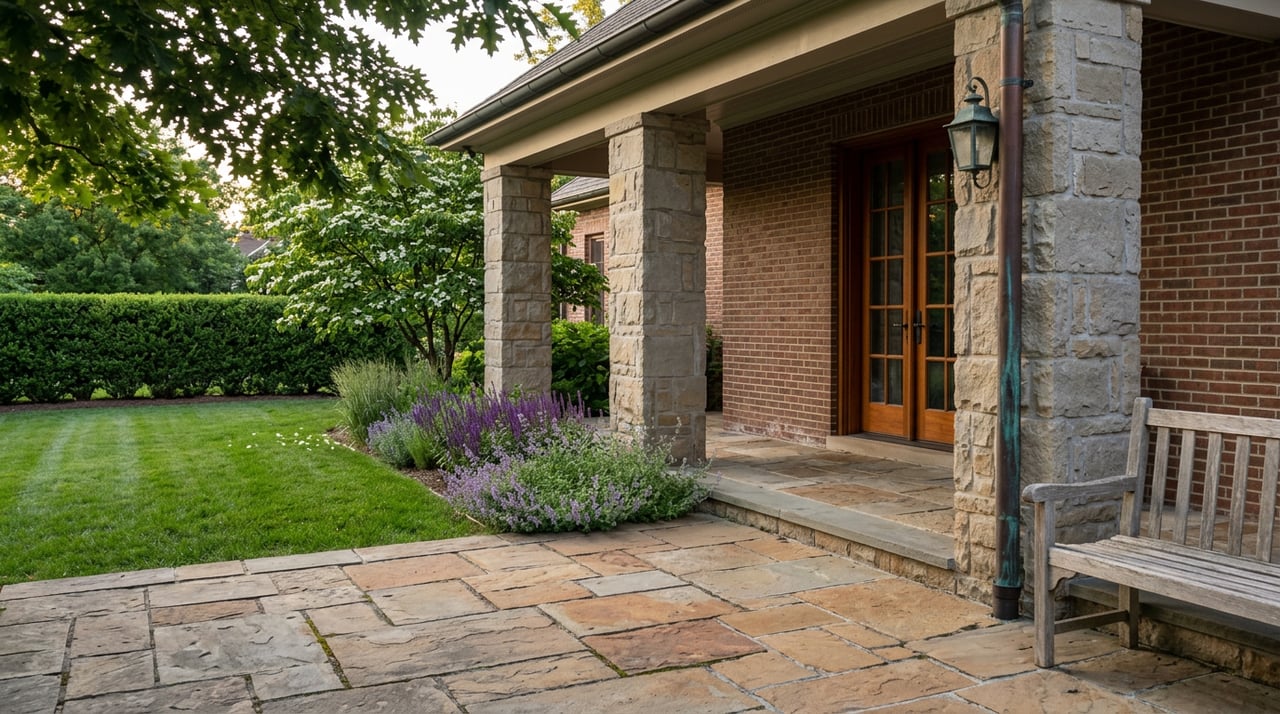
Tilles Park in Ladue May Finally Get a Front Door
August 20, 2026
August 20, 2026
Drive to Tilles Park on any weekend afternoon and there is exactly one way in: south on Litzsinger Road, a left at McKnight, and into the lot that fills up fast once the picnic shelters start smelling like charcoal. That has been true since the Works Progress Administration broke ground on the park in 1938, and it is still true today. What is not true anymore is the assumption that this stays a car-only arrangement. Since February, planners from Great Rivers Greenway have been sitting in rooms at Ladue City Hall trying to figure out how to get people here on foot and by bike instead, and the answer they land on will change how this park functions for everyone who already treats it as their backyard.
That is the part of this story most people in Ladue have not caught yet. Not because it is hidden, but because it has played out in a handful of small public meetings rather than a single splashy announcement.
Tilles Park's official name is the Rosalie Tilles Memorial Park, named for the mother of businessman Cap A. Tilles, who donated the land to the city of St. Louis in 1932 for a municipal park. The WPA built out the grounds starting in 1938, and the 75 acres at Litzsinger and McKnight have been doing what parks do ever since: picnic shelters that book up by spring, open lawn that turns into a de facto sledding hill the first snow that sticks, and a Christmas light display, Winter Wonderland, that has run every winter since 1985 and still requires cash at the gate.
None of that changes. What changes is the ninety seconds before you get out of the car.
Tucked against the park on Litzsinger Road sits the Litzsinger Road Ecology Center, 34 acres of restored prairie, bottomland forest, and an urban creek that most Ladue residents drive past without registering. It is not a secret so much as a place with a locked gate: the center exists to give schoolteachers and their classes hands-on access to a working ecosystem, and it is not open to walk-in visitors. You need a reservation, and the reservation is generally for a field trip, not a Saturday stroll.
That detail matters more than it looks like it should, because it sits directly in the path of the thing planners are currently trying to design.
The project is called Deer Creek Greenway: Brentwood to Tilles Park, and its goal is to extend the existing Deer Creek Greenway westward from Lorraine Davis Park in Webster Groves and Brentwood Park, through Rock Hill, to Tilles Park itself. From there, the plan is to eventually connect to a new shared-use path Ladue is building near I-64 and Clayton Road, with the long-term aim of reaching Ladue Horton Watkins High School.
That is four municipalities worth of coordination, Webster Groves, Brentwood, Rock Hill, and Ladue, all trying to agree on a single corridor. The project's first phase is what planners call an alignment study: figuring out which route is actually feasible before anyone pours concrete. Great Rivers Greenway held three rounds of public input to work through it. Ladue's sessions ran at City Hall on Thursday, February 26 and again on Tuesday, June 9, both from 4 to 6 p.m., with parallel meetings in Brentwood and Rock Hill on their own calendars.
This is the quiet mechanism behind the story. A greenway connecting four cities to one park sounds simple until you remember that a chunk of the land between Ladue's neighborhoods and Tilles Park is protected habitat that was never built for foot traffic. Whatever alignment planners settle on has to thread past or around the ecology center's restored prairie rather than through it, which is exactly the kind of feasibility question these open houses exist to sort out. Nobody has published a preferred route yet. What residents got this spring was the working list of options and a chance to weigh in before one gets picked.
Most trail extension news is background noise: a groundbreaking here, a ribbon cutting there. This one is different because the outcome is still genuinely undecided, and the decision touches a piece of land that functions almost like a private nature preserve hiding in plain sight. If the eventual alignment routes people along Litzsinger Road itself, that is one kind of change to daily life on that street. If it threads a new path around the creek instead, that is a different kind of change entirely, one that could put a walking or biking connection within reach of homes that currently have no practical route to the park except by car.
Either way, the fact that this is being studied at all signals something worth sitting with: Tilles Park was designed in 1938 for a St. Louis County that expected everyone to drive. The greenway project is the first serious attempt to retrofit that assumption, and it is happening in real time, in meetings small enough that most residents never heard about them.
While the greenway question is still open, one nearby piece of daily life already resolved itself this year. Schnucks completed a full remodel of its Ladue Road store this spring, the 59,000-square-foot location the company has operated since 1993, in a city it has served since 1962. The renovation touched nearly everything: a rebuilt deli with new hot cases, an updated floral department, new flooring and lighting throughout, an expanded checkout area with self-checkout added, and new refrigerated cases across dairy, frozen foods, meat, and produce. It is the kind of update that does not make headlines outside a trade publication, but it is the store most Tilles Park visitors pass on the way home, and it looks and functions differently than it did a year ago.
Two changes, two different timelines. One store finished its renovation and reopened. One trail project is still picking its route. Both are happening within a half mile of the same intersection, and both are the kind of detail that only shows up if you are paying attention to this specific stretch of Ladue rather than the city as a whole.
If you live close enough to Tilles Park that a new walking connection would change your routine, the alignment study is the thing to track, not the eventual groundbreaking. Great Rivers Greenway posts project updates and sign-up options for email alerts on its site, and that is the most direct way to see which route gets recommended once the open house input gets folded into a decision. Given how many separate cities have to sign off, do not expect a fast timeline. Expect a recommendation first, then design work, then whatever funding and construction sequencing four municipalities require to actually build something together.
In the meantime, Tilles Park works exactly the way it always has. The picnic shelters still fill up. The Litzsinger and McKnight entrance is still the only way in by car. The ecology center is still locked to anyone without a reservation, quietly holding 34 acres of restored prairie that most of the neighborhood has never set foot on. The difference now is that a real process is underway to decide whether that stays true, or whether Tilles Park eventually gets a walk-in front door to go with its parking lot.
That is the kind of change that does not show up in a listing description or a market report. It shows up in how a neighborhood actually moves, one open house at a time.
If you are weighing a move within Ladue or trying to understand how a specific block connects to the park, the school, or the parts of town Julie Moran works every day, that is exactly the kind of on-the-ground context the Julie Moran Team brings to a conversation. Get Your Free Home Valuation and let's talk about what's actually happening on your street, not just what the listing photos show.
October 1, 2026
September 24, 2026
September 17, 2026
September 15, 2026
City, County, or St. Charles? Your Local's Guide to Living in Greater St. Louis

September 10, 2026
September 3, 2026
August 27, 2026
August 20, 2026
August 13, 2026
When selling or buying a home, every single one of your concerns matters. Julie Moran Team's greatest source of pride is listening to their clients. They will guide you in the right direction. They are on your side. Julie Moran Team's greatest wish is that your real estate dreams materialize.
16505 Wild Horse Creek Rd Chesterfield MO 63017