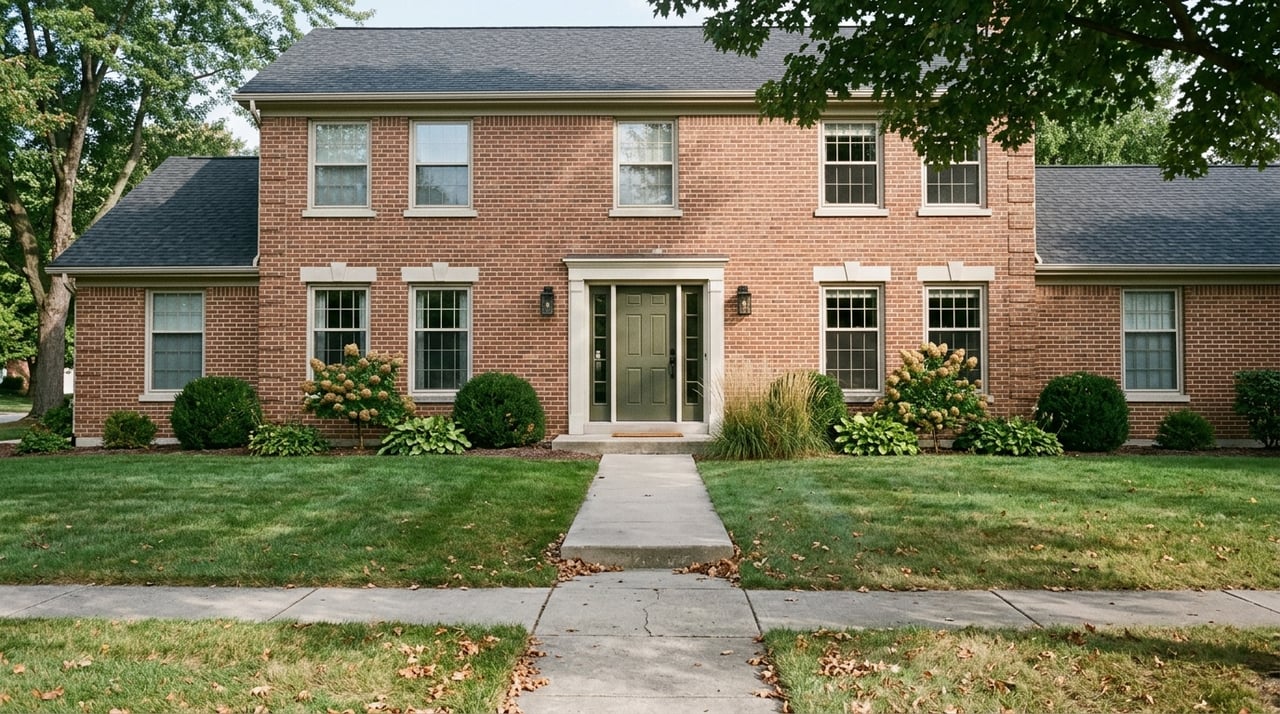
How St. Louis County Property Taxes Affect Home Choices
April 23, 2026
April 23, 2026
Wondering why two similar homes in St. Louis County can come with very different monthly costs? Property taxes are often a big reason, and they can affect what feels comfortable in your budget just as much as the sale price. If you are searching in areas like Chesterfield, Kirkwood, Town and Country, or University City, understanding how taxes work can help you compare homes more clearly and avoid surprises. Let’s dive in.
In Missouri, residential real estate is assessed at 19% of market value. That means a home’s market value is not taxed directly. Instead, the assessor estimates market value, calculates the assessed value, and then local tax rates are applied to that assessed amount, as explained in the Missouri State Tax Commission reassessment guide.
Missouri also reassesses real estate in odd-numbered years. Because of that, a tax bill can change with the market even if the home itself has not changed. In St. Louis County, tax bills are mailed in November and due on December 31, according to the same state reassessment resource.
Many buyers assume the county tax rate is the main story, but that is only part of the picture. According to the St. Louis County 2025 budget, schools account for 50.6% of the average property tax bill, service districts account for 20.0%, cities account for 5.5%, other districts account for 19.1%, and county operations and debt service account for just 4.7%.
That breakdown helps explain why two homes with similar prices can have noticeably different tax bills. In St. Louis County, the school district and city or municipal layer usually matter more than the county rate by itself. If you are narrowing your search by area, this is one of the most important budgeting details to review.
The county’s 2025 residential tax rate is $0.379 per $100 of assessed value, unchanged from 2024, based on the county’s adopted budget. On a $300,000 home, the assessed value would be $57,000, so the county portion alone is about $216 per year, or roughly $18 per month.
That number surprises many buyers because it shows the county portion is relatively small compared with the full tax bill. A simple rule of thumb from the Missouri reassessment pamphlet is that every $0.10 change in tax rate adds about $57 per year on a $300,000 home. Small rate differences can add up, especially when several local levies stack together.
One reason St. Louis County taxes feel inconsistent from one area to another is that city levies are not the same. For example, Chesterfield eliminated its property tax levy in 2015, according to the city budget document. That creates a different tax picture than nearby municipalities that still have city-related levies.
Town and Country’s 2025 general-revenue levy is $0.211 per $100 assessed value, which works out to about $120 per year on a $300,000 home. Kirkwood’s listed city-related levies total $0.501 per $100 assessed value, or about $286 per year on the same home value. University City’s listed city-related levies total $0.836 per $100 assessed value, or about $477 per year on a $300,000 home, based on the same municipal source material.
For many buyers, the biggest swing factor is the school district tax rate. The 2025 tax rate information for Kirkwood School District shows a residential rate of $3.0507 per $100 assessed value. Parkway C-2’s combined operating and debt levy is $3.1636, while University City School District’s combined levy is $3.9073.
On a $300,000 home, those school tax totals are about $1,739 per year in Kirkwood, $1,803 per year in Parkway, and $2,227 per year in University City. That difference can change your monthly payment more than many buyers expect. It is one reason looking beyond the list price is so important when comparing homes across St. Louis County.
A helpful way to think about taxes is in monthly terms, especially if you will escrow them with your mortgage payment. Using only county, city, and school levies on a $300,000 home, a simplified estimate is about $168 per month for a county plus Parkway-school parcel, $178 per month for Town and Country plus Parkway, $187 per month for Kirkwood plus Kirkwood schools, and $243 per month for University City plus University City schools, based on the county’s 2025 budget information.
These are simplified examples, not full tax bills. Some parcels also include fire, sewer, library, special school district, or other district levies. Still, the comparison gives you a practical sense of why one home may fit your monthly budget better than another even if the prices are close.
When you are building a search plan, property taxes should be part of your budget conversation from day one. A home with a lower asking price is not always the lower-cost option over time. If taxes are significantly higher, the monthly payment may end up close to, or even above, a more expensive home in another area.
This is especially relevant if you are deciding between suburbs with different city and school district structures. Looking at the current parcel tax bill can help you compare homes on a more apples-to-apples basis. It can also help you decide whether to adjust your target price range, down payment, or preferred locations.
Before you make an offer, it helps to look at more than the home’s features and list price. Review the current tax bill for the specific parcel and ask how that figure fits into your projected monthly payment. In St. Louis County, the biggest variables are often the school district and municipal boundaries, not the county rate alone.
You should also keep reassessment in mind. Because Missouri reassesses in odd-numbered years, a home purchased after reassessment may carry a tax line that looks different from a nearby property with an older bill. That does not always mean something is wrong, but it does mean you should understand the timing before setting expectations.
If a reassessment appears inaccurate, Missouri does have an appeal process. According to the Missouri State Tax Commission, owners can first appeal informally, then to the Board of Equalization, and then to the State Tax Commission.
For buyers, this matters because an assessment affects future ownership costs. If you are evaluating a home with a tax figure that seems out of line, it is worth asking questions early. Clear information now can help you avoid locking in an escrow number that does not match your long-term budget.
In St. Louis County, property taxes are not just a line item. They shape what you can comfortably afford, which areas may fit your budget, and how you compare homes that seem similar at first glance. The most useful approach is to evaluate the full monthly cost, including taxes, instead of focusing only on purchase price.
If you want help comparing homes across Chesterfield, Kirkwood, Town and Country, University City, or other St. Louis County communities, the Julie Moran Team can help you look at the numbers clearly and make a confident decision that fits your goals.
September 17, 2026
September 15, 2026
City, County, or St. Charles? Your Local's Guide to Living in Greater St. Louis

September 10, 2026
September 3, 2026
August 27, 2026
August 20, 2026
August 13, 2026
August 6, 2026
August 6, 2026
When selling or buying a home, every single one of your concerns matters. Julie Moran Team's greatest source of pride is listening to their clients. They will guide you in the right direction. They are on your side. Julie Moran Team's greatest wish is that your real estate dreams materialize.

16505 Wild Horse Creek Rd Chesterfield MO 63017